What Are Condo Fees?
Condo fees, also known as condominium fees or HOA (Homeowners Association) fees, are monthly charges that condo owners pay to cover the costs of maintaining and managing shared spaces and amenities. These fees are essential for ensuring that the condo building and its common areas remain in good condition and functional for all residents.
Purpose of Condo Fees
The primary purpose of condo fees is to fund the ongoing maintenance and upkeep of the condo building and its shared spaces. This includes everything from landscaping and snow removal to building insurance and utilities. By pooling resources through condo fees, residents can enjoy a well-maintained living environment without the hassle of managing these tasks individually.
What Do Condo Fees Cover?
Condo fees typically cover a wide range of expenses, including:
Maintenance and Repairs
Common Area Maintenance: This includes cleaning hallways, lobbies, elevators, and shared outdoor spaces.
Exterior Maintenance: Repairing or repainting exterior walls, fixing roofs, and maintaining the building's curb appeal.
Groundskeeping: Landscaping, lawn maintenance, snow removal, and other outdoor upkeep.
Utilities
Water and Sewer: Costs associated with water usage and sewage disposal.
Heat and Electricity: Some condo fees cover heating and electricity for common areas, but not necessarily for individual units.
Amenities
Gyms, Pools, and Saunas: Maintenance and operation of shared recreational facilities.
Meeting Rooms and Party Rooms: Upkeep of shared spaces for social gatherings.
Parking: Maintenance of parking lots and garages.
Insurance
Building Insurance: Coverage for the building and common areas against damage or loss.
Reserve Fund: Money set aside for unexpected repairs and major replacements, such as roof repairs or elevator maintenance.
Best Practices for Managing Condo Fees
To ensure that condo fees are managed effectively and transparently, consider the following best practices:
Regular Financial Audits: Conduct regular audits to ensure that funds are being used appropriately and efficiently.
Transparent Communication: Keep residents informed about how their fees are being spent and any upcoming expenses or projects.
Reserve Fund Studies: Perform reserve fund studies to estimate the future costs of major repairs and replacements.
Budget Planning: Create a detailed budget that outlines expected expenses and income from condo fees.
Engage Residents: Involve residents in decision-making processes and encourage them to participate in condo board meetings.
Red Flags to Watch Out For
When evaluating condo fees, be aware of the following red flags:
High Fees with Low Maintenance: If fees are high but the building is poorly maintained, this could indicate mismanagement or insufficient funds.
Lack of Transparency: If the condo board is not transparent about how fees are being spent, this could be a sign of potential financial issues.
Unexpected Special Assessments: Frequent unexpected special assessments for repairs or maintenance could indicate poor financial planning.
Low Reserve Fund: A low or non-existent reserve fund can lead to financial strain when major repairs are needed.
High Turnover in Condo Board: Frequent changes in the condo board can lead to inconsistent management and decision-making.
Types of Condos in Alberta
Alberta offers a variety of condo types, each with its own fee structure and regulations:
Conventional Condos: These are the most common type of condos, where owners have individual units within a shared building.
Bare Land Condos: In these condos, owners own the land beneath their unit but share common areas with other unit owners.
Townhouse Condos: These are multi-level units that share walls with neighboring units but have their own entrances.
Loft Condos: These units are typically open-concept spaces with high ceilings, often found in converted industrial buildings.
What Condo Fees Don’t Cover
While condo fees cover a wide range of expenses, there are certain costs and responsibilities that typically fall outside the scope of these fees. It's important for condo owners to be aware of these to manage their budgets effectively.
Inside Your Unit
Interior Maintenance and Repairs: Any repairs or maintenance needed inside your unit, such as fixing a leaky faucet, repairing drywall, or replacing appliances, are generally the owner's responsibility.
Upgrades and Renovations: Costs associated with upgrading or renovating the interior of your unit, including installing new flooring, kitchen remodels, or bathroom renovations, are not covered by condo fees.
Personal Utilities: Utilities that are used within your unit, such as electricity, gas, internet, and cable TV, are usually billed directly to the unit owner and are not included in condo fees.
Personal Expenses
Homeowner's Insurance: While condo fees cover the building's insurance, individual unit owners are responsible for purchasing their own homeowner's insurance to cover personal belongings and interior damage.
Property Taxes: Condo fees do not cover property taxes. Each unit owner is responsible for paying their own property taxes based on the assessed value of their unit.
Mortgage Payments: Monthly mortgage payments are not included in condo fees and must be paid separately by the unit owner.
Miscellaneous
Special Assessments: In cases where major repairs or improvements are needed that exceed the condo association's budget or reserve fund, special assessments may be levied. These are additional charges that each unit owner must pay to cover the cost of the project.
Parking and Storage: Some condos may charge separate fees for parking spaces or storage units that are not included in the regular condo fees.
Amenities and Services: Certain premium amenities or services, such as guest suites, party room rentals, or additional security, may incur extra charges that are not covered by regular condo fees.
Condo Fees in Duplexes, Row Houses, and More
Condo fees can vary depending on the type of property, including duplexes and row houses. Here's a closer look at how these fees apply:
Duplexes: In a duplex condo, the fees typically cover shared expenses such as exterior maintenance, landscaping, and insurance for common areas. However, owners are usually responsible for the maintenance and repairs of their individual units.
Row Houses: Condo fees for row houses often cover similar expenses to those of traditional condos, including exterior maintenance, insurance, and amenities. As with duplexes, interior maintenance and personal utilities are the owner's responsibility.
Stacked Townhouses: In these properties, condo fees may cover common area maintenance, landscaping, and insurance. Owners are responsible for the upkeep of their own units, including interior repairs and personal utilities.
Semi-Detached Homes: Condo fees for semi-detached homes typically include exterior maintenance, common area upkeep, and insurance. Owners handle their interior maintenance and personal expenses.
In Summary,
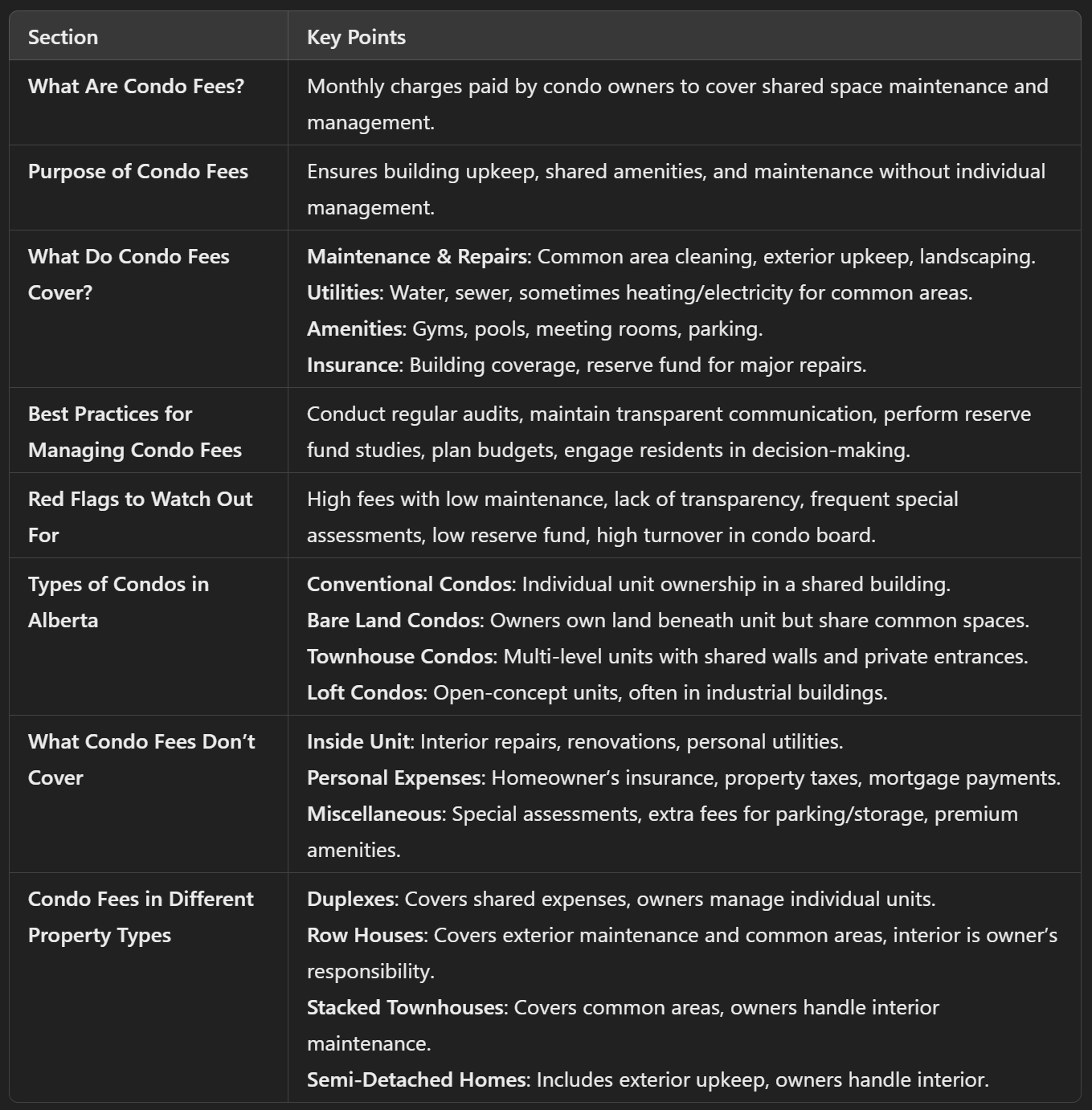
Understanding the scope of condo fees and their exclusions is vital for anyone considering condo ownership. By being well-informed, you can make better decisions and enjoy a well-maintained and financially stable living environment.
Your Trusted Partner in Real Estate
Are you thinking of Selling or Buying your dream home? Connect with our expert team and learn how we make every real estate decision a confident one.

Disclaimer:
The information provided in this blog is for general informational purposes only and should not be considered legal, financial, tax, or investment advice. While we strive to ensure accuracy, real estate laws, market conditions, and regulations change frequently. Readers are encouraged to conduct their own research and consult with qualified professionals such as real estate attorneys, financial advisors, mortgage brokers, or tax experts before making any decisions related to buying, selling, or investing in real estate. We do not assume any liability for actions taken based on the information provided in this blog.